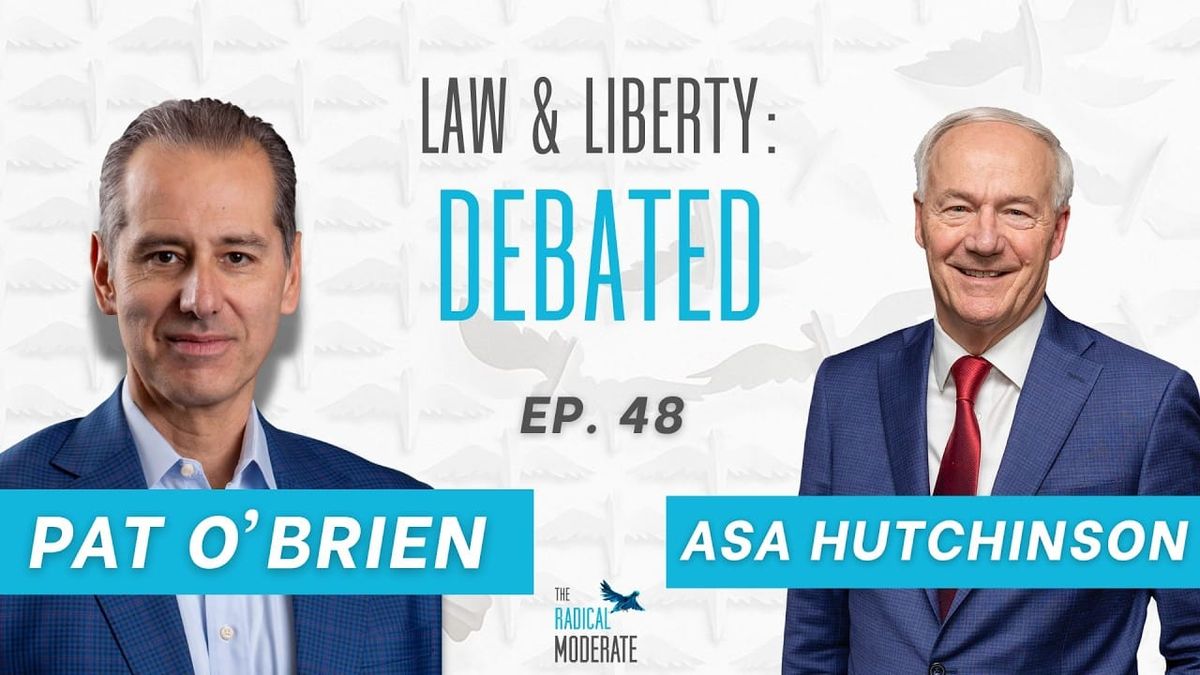
Balancing public safety, economic demand, and international stability requires more than simple political slogans. As federal drug policy shifts and global tensions strain military resources, understanding how high-level decisions are executed matters now more than ever. Former Arkansas Governor and DEA Administrator Asa Hutchinson joins the podcast to break down the mechanics of border enforcement, domestic drug regulation, and foreign diplomacy.
We sit down to examine the operational mechanics behind domestic substance control and global security strategies. We get into the breakdown of demand suppression versus legal deterrence, cartel interdiction tactics along southern borders, foreign policy options regarding nuclear enrichment, and transition planning for post-communist regimes. Governor Hutchinson outlines his core philosophy: viewing addiction not as a finite conflict with a fixed end, but as a continuous management effort similar to mental health care that demands ongoing policy discipline.
Enforcing federal law while protecting civil liberties comes with inescapable trade-offs, financial costs, and logistical limits on military intervention. Executive decisions require balancing strict public safety rules against individual choices, even when complete success over complex social issues remains out of reach. Viewers will walk away with a practical framework for evaluating how administrative policy impacts national security, trade routes, and local crisis management.
If you care about drug policy reform, border security operations, and international relations, you’ll get a lot from this. Please Subscribe and Share to support the show. What is the most effective balance between federal regulation and individual freedom when handling high-risk substances?